Platform Engineering: Building Developer Self-Service

Why Platform Engineering
The DevOps movement successfully broke down silos between development and operations, but it also shifted significant infrastructure complexity onto application teams. Developers found themselves managing Terraform modules, Kubernetes manifests, CI/CD pipelines, and monitoring configurations alongside their application code. Platform Engineering addresses this by building golden paths: curated, well-supported workflows that abstract infrastructure complexity while preserving flexibility for teams that need it.
The goal is not to restrict what developers can do, but to make the right thing the easy thing. When provisioning a new service with production-grade observability, security scanning, and deployment pipelines takes 30 minutes instead of two weeks, teams naturally gravitate toward the platform rather than building bespoke solutions. This reduces cognitive load, improves consistency, and lets application engineers focus on delivering business value.
Internal Developer Platform
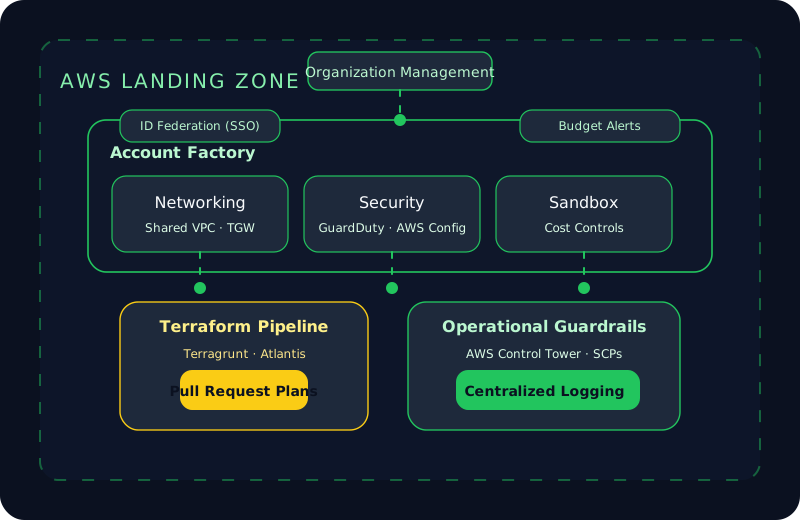
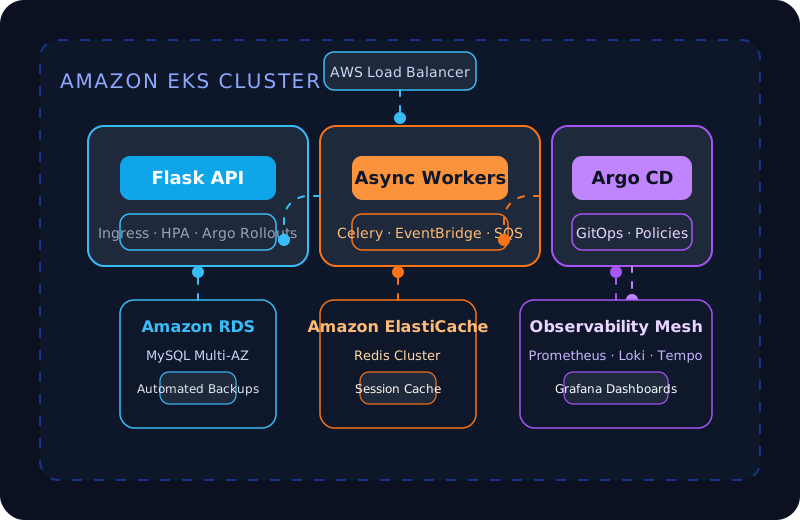
Backstage serves as the developer portal, providing a unified interface for service discovery, documentation, and self-service provisioning. Behind the portal, Terraform modules encapsulate the infrastructure patterns that teams need most frequently: Kubernetes namespaces with RBAC, RDS databases with automated backups, S3 buckets with encryption policies, and monitoring dashboards pre-configured with golden signal alerts. Argo CD handles the deployment layer, automatically reconciling the desired state defined through the portal with the actual state in each cluster. When a developer requests a new environment through Backstage, the platform creates a pull request with the generated Terraform and Kubernetes manifests, triggers the CI pipeline for validation, and merges automatically after approval.
Golden Paths
Standardised templates cover the most common service patterns: REST APIs, event-driven processors, scheduled jobs, and static frontends. Each template includes a complete CI/CD pipeline with build, test, scan, and deploy stages; Kubernetes manifests with appropriate resource limits, health checks, and pod disruption budgets; Grafana dashboards with latency, error rate, and throughput panels; and security policies including network policies, pod security standards, and image scanning rules. These templates reduce time-to-production from weeks to hours for new services, while ensuring that every service meets the organisation's operational standards from day one.
Measuring Developer Experience
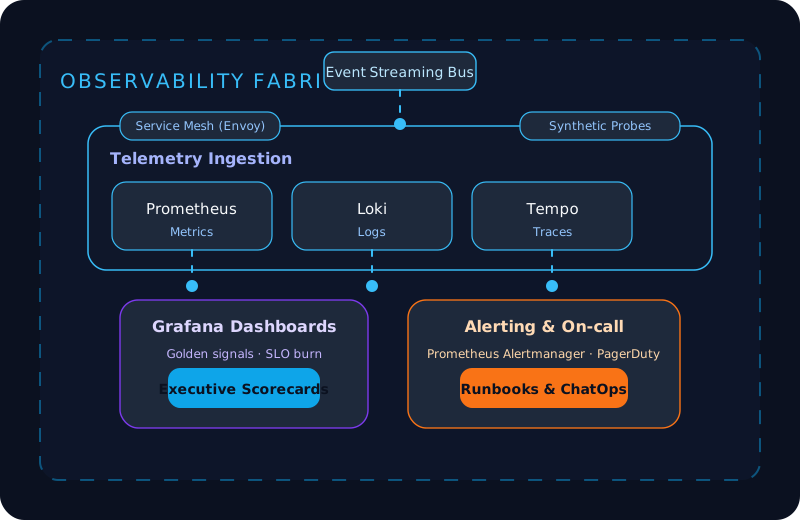
DORA metrics provide the quantitative foundation for measuring platform effectiveness. Deployment frequency, lead time for changes, change failure rate, and mean time to recovery are tracked across all teams and visualised on dashboards accessible to both engineers and leadership. Developer satisfaction surveys complement the quantitative data, capturing qualitative feedback about friction points, missing capabilities, and feature requests. Platform adoption dashboards track how many teams use each golden path, how often self-service provisioning is used versus manual requests, and where developers deviate from recommended patterns, providing insight into where the platform needs to evolve.
Platform Capabilities
- Self-service environment provisioning reducing setup time from 2 weeks to 30 minutes.
- Standardised service templates covering 90% of new service requirements.
- DORA metrics dashboard tracking team performance across 15+ engineering squads.
- Automated security scanning and compliance checks built into every golden path.
- Internal documentation portal with runbooks, architecture decision records, and onboarding guides.
Platform Engineering is an ongoing investment in developer productivity. The platform team operates as an internal product team, treating developers as customers, maintaining a roadmap driven by usage data and feedback, and iterating on the platform continuously. The measure of success is not the platform's technical sophistication, but how effectively it enables application teams to deliver value to end users.
Recent Posts